
Exploring the realm of budget-friendly car insurance quotes in Australia opens up a world of possibilities. As you navigate through the intricacies of finding the perfect coverage without breaking the bank, a treasure trove of tips and insights awaits. Brace yourself for a journey filled with valuable information and smart strategies to secure the best deals on car insurance quotes.
Delve into the nuances of researching quotes, uncovering budget-friendly insurance options, understanding coverage details, and mastering the insurance claim process. Let’s embark on this quest to unravel the mysteries of car insurance on a budget in Australia!
Researching Car Insurance Quotes
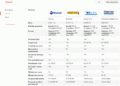
When it comes to getting car insurance, it’s essential to take the time to research and compare quotes from different providers. This process can help you find the best coverage that fits your budget and needs.
The Importance of Shopping Around
- By comparing quotes, you can potentially save money by finding a more affordable policy.
- Each insurance provider offers different coverage options and discounts, so shopping around allows you to find the best match for your specific situation.
- Researching quotes can also help you understand the different types of coverage available and what they entail.
Tips for Effective Comparison
- Make sure to compare policies with similar coverage levels to get an accurate comparison of prices.
- Consider the reputation and customer service of the insurance company in addition to the price.
- Check for any additional fees or hidden costs that may not be included in the initial quote.
Factors to Consider Besides Price
- Customer reviews and ratings can give you insight into the overall satisfaction of policyholders with a particular insurer.
- Look into the claim process and how quickly claims are processed by each insurance company.
- Consider the coverage limits and exclusions of each policy to ensure you are adequately protected in case of an accident.
Budget-Friendly Insurance Options
When looking for budget-friendly car insurance options in Australia, there are various strategies and discounts you can take advantage of to lower your premiums and save money in the long run.
Potential Discounts Available for Car Insurance in Australia
- Multi-policy discount: If you have multiple insurance policies with the same provider, such as home and car insurance, you may be eligible for a discount.
- No-claim bonus: Insurance companies often reward policyholders who do not make any claims with a discount on their premiums.
- Low mileage discount: If you do not drive your car often, you may qualify for a lower premium based on your reduced risk of accidents.
- Safe driver discount: Maintaining a clean driving record with no accidents or traffic violations can lead to lower insurance costs.
Strategies for Negotiating Lower Premiums with Insurance Providers
- Compare quotes: Shop around and compare quotes from different insurance providers to find the best deal.
- Consider increasing your excess: Opting for a higher excess amount can lower your premium, but make sure you can afford to pay the excess in case of a claim.
- Bundle policies: Combining multiple insurance policies with the same provider can often result in a discounted rate for each policy.
- Ask for discounts: Inquire about any available discounts or promotions that you may qualify for to reduce your premium.
Understanding Excess and Its Impact on Insurance Costs
Excess is the amount you agree to pay towards a claim before your insurance coverage kicks in. Choosing a higher excess can lower your premium, as you are taking on more financial responsibility in the event of a claim. It’s essential to strike a balance between a manageable excess amount and a reasonable premium to ensure you are adequately protected while keeping costs down.
Understanding Insurance Coverage
When it comes to car insurance in Australia, it’s important to understand the different coverage options available. From mandatory minimum requirements to optional extras, knowing what each type of coverage includes can help you make an informed decision when choosing the right policy for your needs.
Types of Car Insurance Coverage
- Compulsory Third Party (CTP) Insurance: This is the minimum requirement for all vehicles in Australia and covers liability for injuries caused to others in a car accident.
- Third Party Property Damage Insurance: Covers damage to another person’s property in an accident caused by your vehicle.
- Third Party Fire and Theft Insurance: Includes coverage for fire damage and theft of your vehicle, in addition to third party property damage.
- Comprehensive Insurance: The most extensive coverage option, providing protection for your vehicle as well as damage to other vehicles and property.
Minimum Requirements for Car Insurance in Various States
- New South Wales (NSW): Mandatory CTP insurance must be obtained before registering a vehicle.
- Victoria: CTP insurance is required and included in vehicle registration fees.
- Queensland: CTP insurance is compulsory and typically included in vehicle registration costs.
- Western Australia: CTP insurance is a requirement for vehicle registration.
Optional Coverage Types and Benefits
- Roadside Assistance: Provides help in case of breakdowns or emergencies while on the road.
- Rental Car Coverage: Covers the cost of a rental car if your vehicle is being repaired after an accident.
- Windscreen Cover: Pays for repairs or replacement of damaged windscreens without affecting your no-claim bonus.
Insurance Claim Process
When it comes to making a car insurance claim, it’s important to understand the steps involved to ensure a smooth process. From reporting the incident to receiving compensation, each step plays a crucial role in getting your claim approved. Here, we will discuss the key steps, tips to expedite the process, and common pitfalls to avoid during the claims process.
Steps Involved in Making a Car Insurance Claim
- Contact your insurance provider as soon as possible after the incident to report the claim.
- Provide all necessary information, such as the details of the accident, photos, and any relevant documents.
- Get an estimate for the damages from a repair shop approved by your insurance company.
- Wait for the insurance company to assess the claim and determine the coverage and compensation amount.
- If the claim is approved, you will receive compensation as per your policy terms.
Tips to Expedite the Claims Process
- Report the claim promptly to avoid any delays in processing.
- Provide all the required information and documentation accurately to prevent back-and-forth requests.
- Stay in touch with your claims adjuster and respond promptly to any inquiries or requests for additional information.
- Follow up on the status of your claim regularly to ensure it is progressing smoothly.
Common Pitfalls to Avoid During the Claims Process
- Avoid providing incomplete or inaccurate information, as it can lead to delays or claim denial.
- Do not delay in reporting the claim, as waiting too long can impact the processing time and outcome.
- Avoid discussing fault or liability with other parties involved in the incident without consulting your insurance provider.
- Be cautious of fraudulent activities or exaggerated claims that can jeopardize the approval of your legitimate claim.
Summary
As we draw the curtains on this enlightening discussion about shopping for car insurance quotes on a budget in Australia, one thing is crystal clear – armed with knowledge and savvy tips, you hold the power to make informed decisions.
Remember, the road to affordable car insurance is paved with insights, discounts, and smart negotiation tactics. Here’s to safeguarding your vehicle and your wallet with the best insurance deals out there!
FAQ Corner
What factors should I consider besides price when choosing an insurance policy?
When selecting an insurance policy, consider coverage limits, deductible amounts, customer service reputation, and any additional perks offered by the insurer.
How can I expedite the insurance claim process?
To speed up the claims process, ensure you have all necessary documentation, provide accurate information, and promptly respond to any requests from the insurance company.
What are some common pitfalls to avoid during the insurance claims process?
Avoid delaying the reporting of an incident, providing incomplete information, and failing to follow up on the status of your claim.